.jpg)
Should You Use Porcelain for Splashbacks? Stylish, Seamless & Easy to Clean
.jpg)
Should You Use Porcelain for Splashbacks? Stylish, Seamless & Easy to Clean
Designing your kitchen, the splashback is not only a functional part, it is a style feature. Glass, ceramic tiles, stainless steel have long been popular. However, porcelain splashbacks have dominated the last few years and they present an unrivalled combination of beauty, durability and simple maintenance.
Whether you are installing a new kitchen or upgrading an old one, you may be asking yourself: Is porcelain the splashback I need? Now, the question is why porcelain is the favourite choice of designers, builders, and homeowners.
What is a Porcelain Splashback?
A porcelain splashback is normally constructed out of large format porcelain slabs which are fitted to the wall behind your benchtop. Porcelain is a form of ceramic that is fired at very high temperatures, therefore, extremely dense, strong and non-porous.
Large-format porcelain slabs produce a seamless appearance, unlike small tiles, which have several grout lines, which are not good in a modern kitchen.
Key Benefits of Porcelain Splashbacks
1. Stylish and Versatile
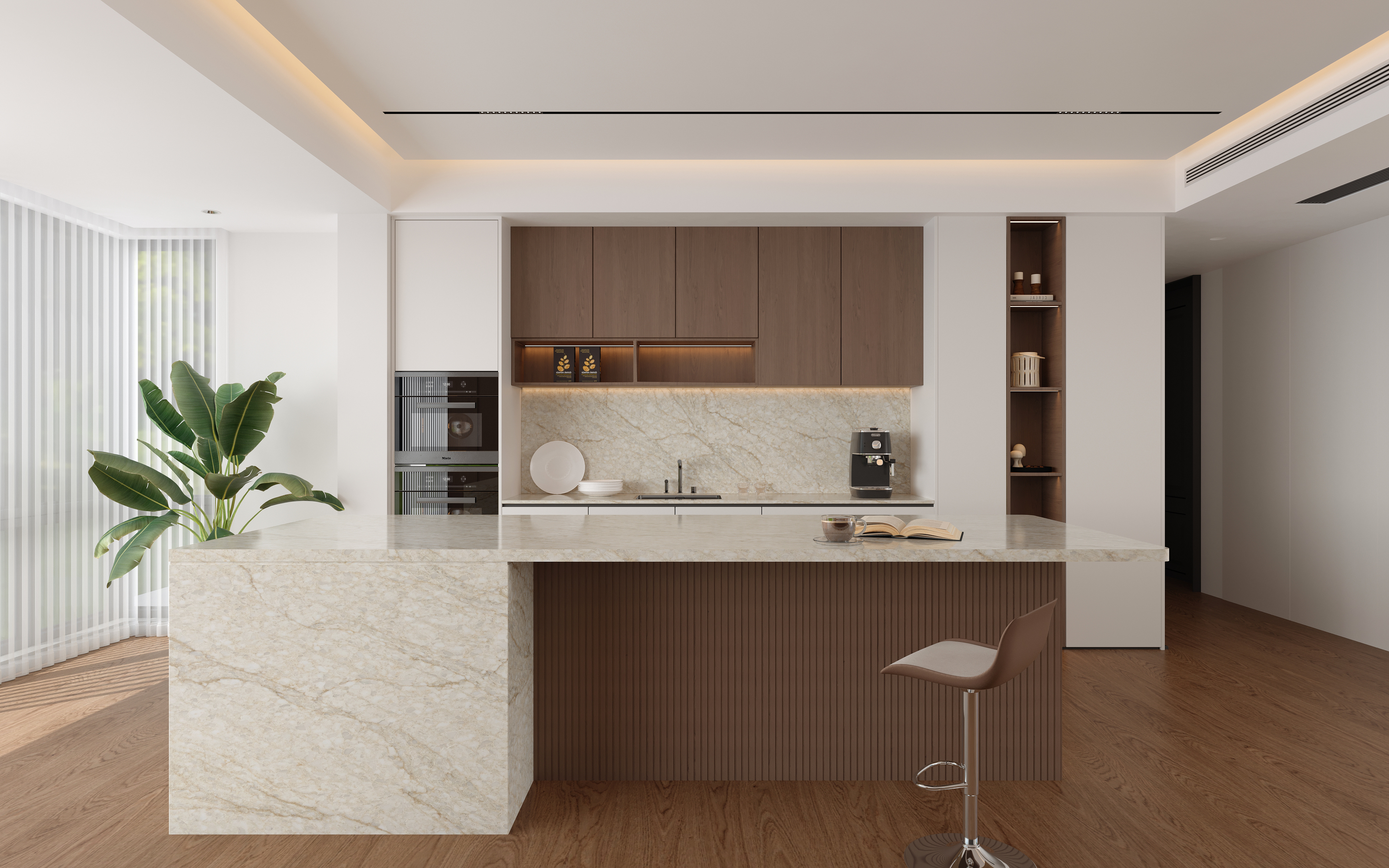
Porcelain can look like natural stone, concrete or even timber, yet without the maintenance. Popular designs are:
· Porcelain with the look of marble to last a lifetime.
· Minimalist look in sleek solid colours.
· Depth and character with textured finishes.
Such a variety of patterns and colours mean that porcelain splashbacks can fit into modern and traditional kitchen styles.
2. Seamless Design
Porcelain can be supplied in large slab sizes, which enables a near-seamless surface with very little joining. This does not only appear sleek but also increases the space feeling in the kitchen.
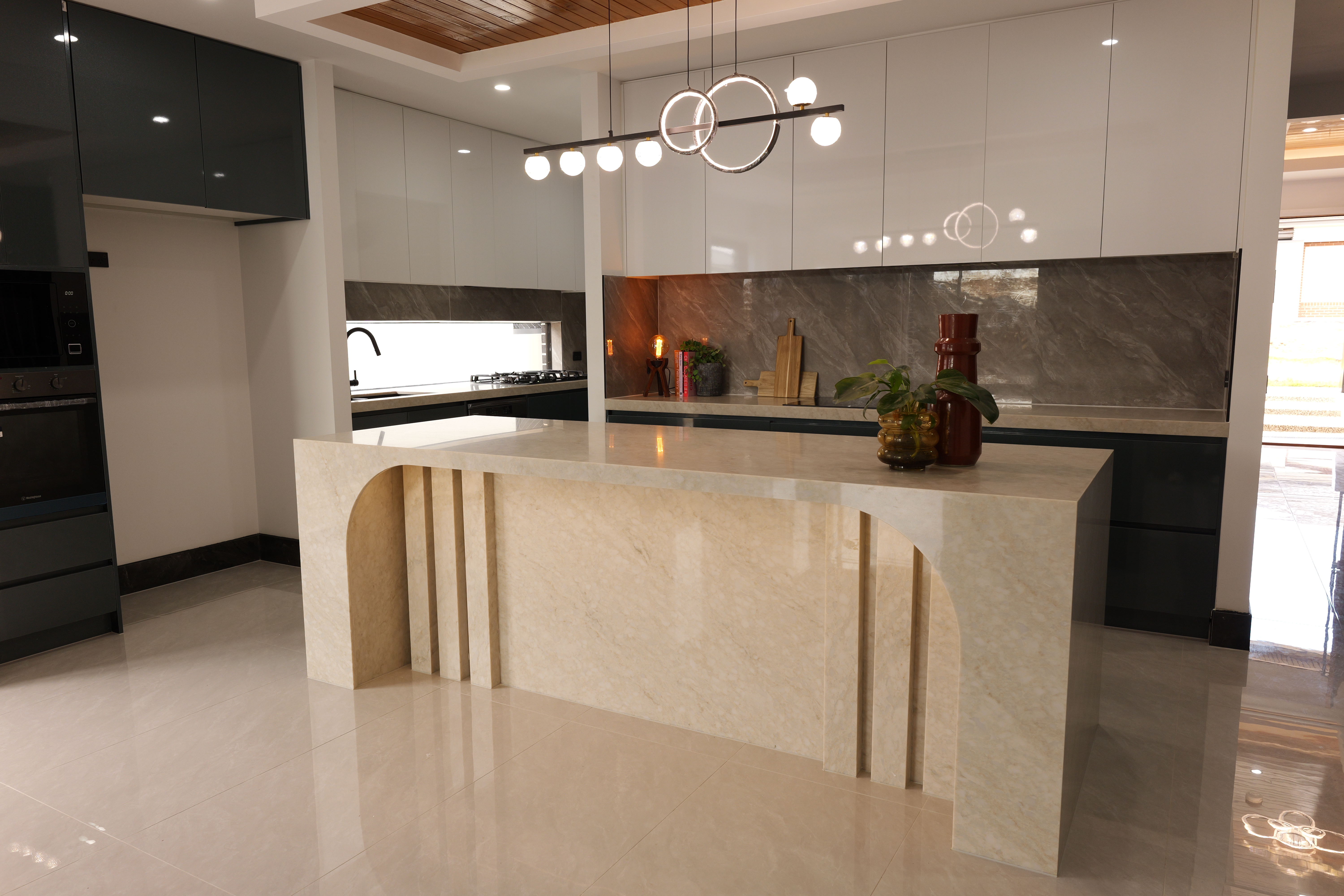
When you are using porcelain as your benchtops, you are able to continue the same material on the wall to give it a very cohesive, high-end finish.
3. Easy to Clean
Kitchen splashbacks have to contend with the daily onslaught of cooking oils, pasta sauce, coffee and others. Porcelain is easy to clean:
· Stains are repelled by non-porous surface.
· It does not need to be sealed as opposed to natural stone.
· Spills and grease are removed with a wet cloth.
There is also the possibility of less or no grout lines, therefore, less dirt and grime accumulate over time.
4. Highly Durable
Porcelain is among the strongest interior surfaces that can be used. It is:
· Scratch resistant: will not be easily marked with cooking utensils.
· Heatproof: safe behind cooktops.
· Waterproof: does not swell or warp.
This fact implies that your splashback will remain fresh and new many years ahead.
Porcelain Splashbacks vs. Other Materials
Feature | Porcelain | Glass | Tiles | Stainless Steel |
Heat Resistance | High | Medium | High | High |
Stain Resistance | High | High | Medium | High |
Grout Lines | Minimal | None | Many | None |
Design Variety | Huge | Limited colours | Wide | Limited |
Maintenance | Low | Low | Higher | Low |
While glass and stainless steel offer a clean, modern look, porcelain outperforms them in terms of design flexibility and the ability to match with benchtops for a seamless style.
Design Ideas for Porcelain Splashbacks
1. Marble-Inspired Elegance
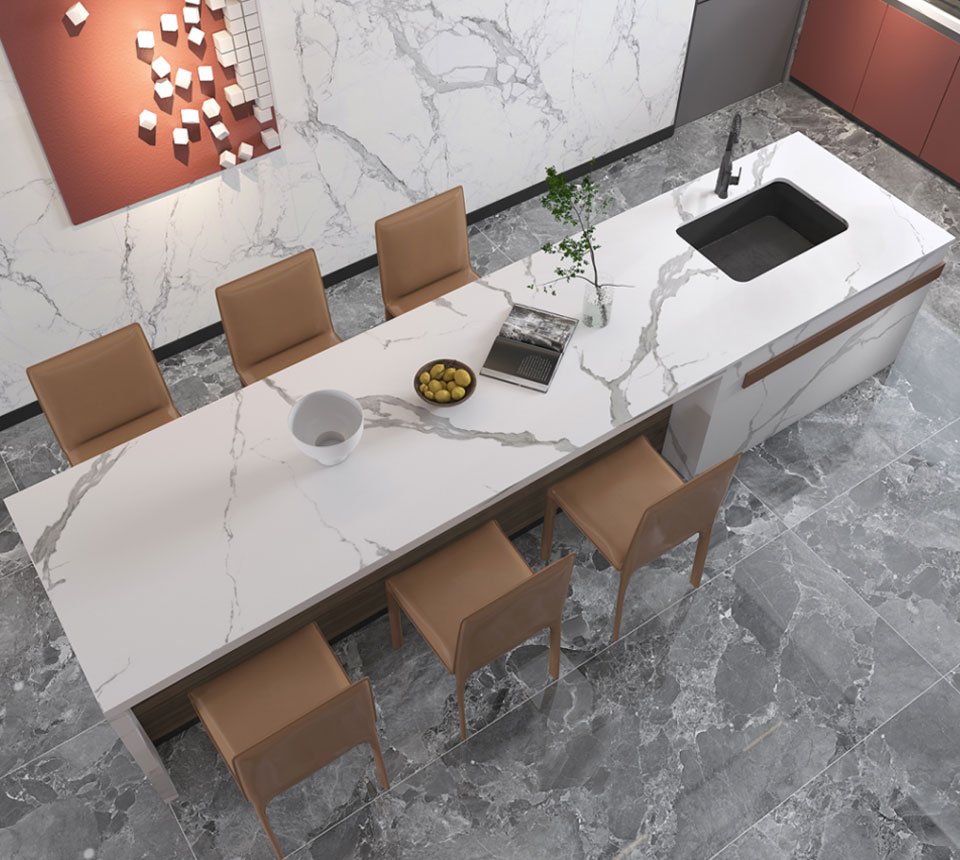
Use a white porcelain slab with bold grey veining to create a luxury feel without the upkeep of real marble.
2. Minimalist Matte Finishes
Matte porcelain in a soft grey or beige works beautifully in contemporary kitchens.
3. Bold Statement Veins
For a dramatic focal point, choose a large-format slab with striking patterns or colours.
4. Matching Benchtop & Splashback
Use the same porcelain slab for both to create a continuous flow and premium look.
Installation Considerations
Porcelain is lightweight as compared to some stones, but it must be installed by professionals:
Slabs of large sizes should be handled carefully.
Accurate cutting allows alignment around power points and cabinetry to be perfect.
Adequate adhesive guarantees a long lasting and safe fit.
One of the most important factors in attaining a perfect finish is to work with an experienced fabricator or stonemason.
Cost Factors
Porcelain splashbacks may have a higher upfront cost compared to basic tile or glass options, but they offer long-term savings:
· Minimal maintenance costs.
· Long lifespan — no need for early replacement.
· Resistant to staining and chipping, reducing repair needs.
For many homeowners, the added durability and style make the investment worthwhile.
When Porcelain is the Best Choice
Porcelain splashbacks are ideal if you want:
· A seamless, modern look with minimal joins.
· Low maintenance without sealing or special cleaning.
· A coordinated kitchen design where the splashback matches your benchtop.
· Long-term durability that stands up to daily cooking and cleaning.
Conclusion
Then, is porcelain the right choice of splashback? Definitely, when you appreciate style, smooth design and maintenance. Porcelain is beautiful and practical with an infinite variety of design choices and outstanding durability.
Porcelain splashbacks can enhance your kitchen to a point where it is not only functional but also beautiful with marble-inspired elegance and smooth modern matte finishes. And you will clean your kitchen less and enjoy it more with minimum maintenance.
When you are ready to consider porcelain as an option in your splashback, then a trip to a showroom to view full slabs is the best way to get a sense of their size, pattern and finish.



.jpg)